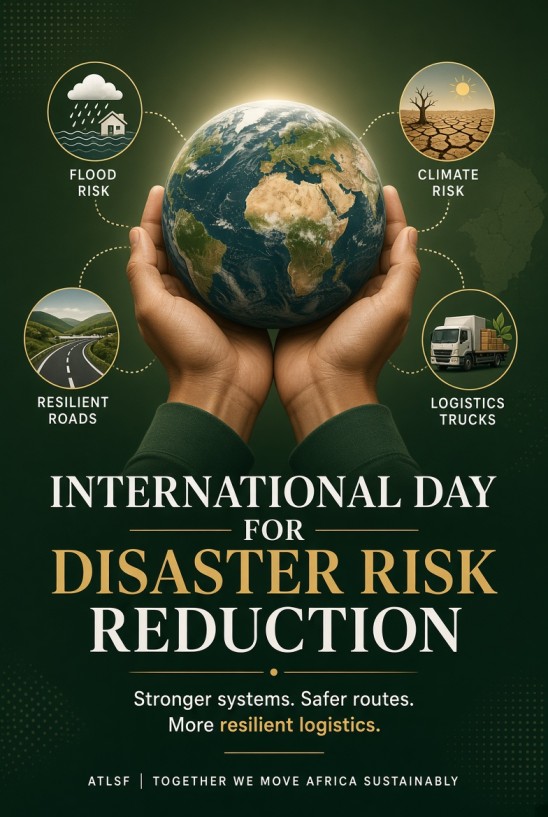
On 13 October each year, the world observes the International Day for Disaster Risk Reduction. The day is a global call to strengthen resilience, reduce vulnerability, and prevent disasters from turning into full-scale humanitarian and economic crises.
For many, the conversation centres on communities, housing, and emergency response. These are essential. Yet one critical dimension is often under-emphasised: the role of transport and logistics systems in both creating and reducing disaster risk.
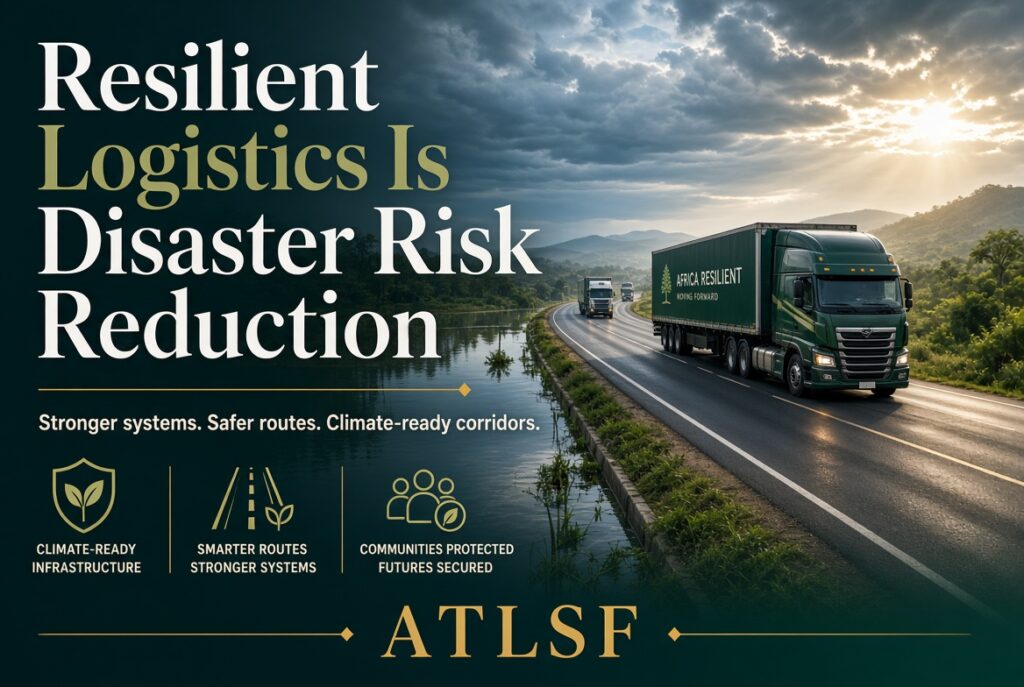
At the African Transport & Logistics Supportive Foundation (ATLSF), we see disaster risk not as a distant or abstract threat, but as an operational reality that logistics professionals confront regularly. Flooded roads, washed-out bridges, blocked corridors, damaged vehicles, delayed deliveries, and heightened safety risks for drivers are not occasional inconveniences. In many regions, they are recurring seasonal challenges that disrupt supply chains, raise costs, and put livelihoods at risk.
When Disasters Hit Logistics, Everyone Feels the Impact
Transport networks are the arteries of economic and social life. When those arteries are compromised, the consequences cascade quickly.
A single major flood can strand trucks for days, spoil perishable cargo, interrupt the movement of food, medicine, and essential goods, and force operators to absorb unexpected costs. In more severe cases, infrastructure damage can isolate entire communities, making recovery slower and more expensive.
The impact is not limited to large logistics companies. Small and medium operators, independent drivers, and informal transporters often feel the effects most acutely. Limited access to insurance, weaker financial buffers, and less resilient equipment mean that a single climate-related disruption can threaten business continuity.
Disaster risk reduction in the logistics sector is therefore both a public interest issue and a practical business imperative.
Climate Change Is Raising the Stakes
Climate change is intensifying the frequency and severity of extreme weather events. Heavier rainfall, prolonged wet seasons, rising temperatures, and more unpredictable weather patterns are placing greater pressure on roads, bridges, drainage systems, and port infrastructure.
In many places, existing transport infrastructure was not designed for these new conditions. Poor drainage, inadequate maintenance, and the accumulation of waste in waterways further amplify the risk of flooding along major corridors. What begins as an environmental or waste-management problem quickly becomes a logistics emergency.
This is why ATLSF has consistently linked climate resilience, waste management, and operational efficiency. Clogged drains and unmanaged plastic waste do not only harm the environment; they increase the likelihood of flooded roads that stop trucks in their tracks.
Reducing disaster risk in logistics requires addressing both the symptoms and the underlying drivers.
From Reaction to Preparedness
Too often, the response to transport disruptions remains reactive. Resources are mobilised after roads are already impassable or after cargo has already been delayed. While emergency response is necessary, it is not sufficient.
Effective disaster risk reduction demands a shift toward preparedness and prevention. This includes:
- Investing in climate-resilient road and drainage infrastructure
- Improving maintenance regimes along critical transport corridors
- Strengthening early warning systems that reach operators in time
- Enhancing coordination between transport authorities, local governments, and logistics stakeholders
- Supporting operators with practical guidance on risk awareness and safer operating practices
- Integrating waste management into corridor planning so that drains and waterways remain functional
These measures do not eliminate risk entirely. They do, however, reduce the likelihood that a weather event will escalate into a prolonged logistics crisis.
The Human Dimension
Behind every delayed shipment is a driver, a fleet manager, a warehouse worker, or a small business owner. Disaster-related disruptions affect incomes, increase stress, and in some cases place people in physical danger.
ATLSF’s work is grounded in the understanding that logistics professionals are not only service providers; they are stakeholders whose safety, livelihoods, and operational realities must inform policy and planning. Amplifying their experiences is essential if disaster risk reduction strategies are to be practical and effective on the ground.
A Call for Integrated Action
The International Day for Disaster Risk Reduction reminds us that resilience is built before disaster strikes. For the logistics sector, this means recognising that roads, bridges, ports, and transport corridors are critical infrastructure whose failure carries wide social and economic costs.
Governments, private operators, development partners, and civil society all have roles to play. Stronger collaboration, better data, and sustained investment in resilient systems can significantly reduce the human and financial toll of climate-related disruptions.
At ATLSF, we remain committed to advocating for climate-resilient logistics, cleaner and better-maintained transport corridors, and policies that protect both the people who move goods and the communities that depend on them.
Disaster risk reduction is not only about surviving the next flood or storm. It is about building transport systems that can continue to function, recover quickly, and support sustainable development even under increasing climate pressure.
Stronger systems.
Safer routes.
More resilient logistics.
Together we move Africa — sustainably.
Contact ATLSF
Phone: +234 915 595 2144
Website: www.atlsf.org