
The Federal Government of Nigeria has taken a bold and timely step toward addressing the climate crisis through the built environment. In a recent statement at the National Kick-off Workshop for the Development of the National Decarbonization and Resilience Roadmap for Nigeria’s Buildings and Construction Sector, the Minister of Housing and Urban Development, Muttaqha Darma, announced that the ongoing review of the National Building Code will integrate comprehensive climate-smart standards.
These include energy efficiency requirements, the use of sustainable building materials, disaster-risk reduction measures, and resilient design principles. The goal is clear: to make buildings across the country safer, more durable, and environmentally sustainable while significantly reducing carbon emissions from the construction and operation of buildings.
Why This Development is Critical for Transport and Logistics
At the African Transport & Logistics Supportive Foundation (ATLSF), we have long advocated for climate-resilient infrastructure because the transport and logistics sector is among the most vulnerable to climate change impacts. Flooded warehouses, damaged truck parks, collapsed roads, and disrupted supply chains have become all too common during extreme weather events.
The revised National Building Code offers a much-needed framework that can directly benefit logistics operators by:
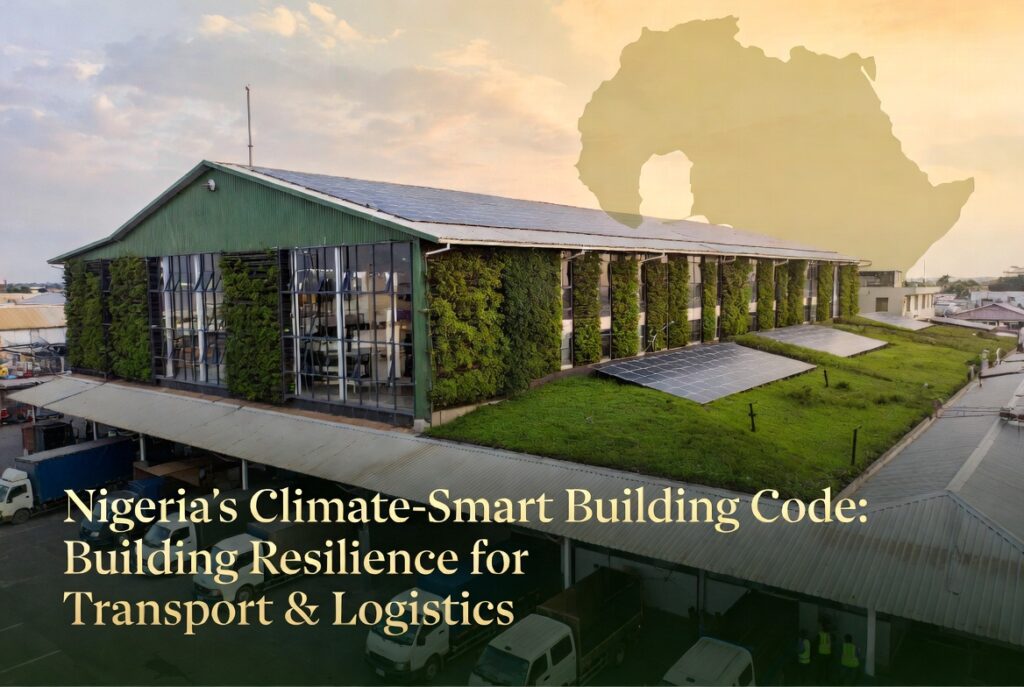
- Promoting the construction of warehouses and terminals that can withstand flooding, high winds, and extreme temperatures
- Encouraging energy-efficient designs that lower operational costs for cooling, lighting, and power in logistics facilities
- Supporting the use of locally sourced, low-carbon building materials
- Integrating green technologies such as solar power and rainwater harvesting systems
As Nigeria experiences rapid urbanisation and population growth, the buildings and infrastructure we develop today will determine the strength and reliability of our supply chains for the next several decades.
Broader Government Reforms Supporting This Initiative
The review of the National Building Code is part of a larger package of reforms by the Federal Ministry of Housing and Urban Development. These include the reviewed National Urban Development Policy, the National Policy on Rural Settlement Planning and Development, and National Physical Planning Standards. Additionally, the ministry is implementing climate-responsive housing under the Renewed Hope Estates and Cities Initiative.
Minister Darma emphasised that these efforts align Nigeria with its commitments under the Paris Agreement, the Sustainable Development Goals (SDGs), the New Urban Agenda, and the Nationally Determined Contributions (NDCs).
ATLSF’s Position and Call to Action
We warmly welcome this policy direction and commend the Federal Government for prioritising climate action in the built environment. However, policy alone is not enough; effective implementation and enforcement will be key.
ATLSF will continue to:
- Advocate for the specific needs of the transport and logistics sector to be adequately reflected in the final code
- Raise awareness among logistics operators, freight forwarders, and warehouse owners about the benefits of adopting climate-smart standards
- Push for stronger public-private partnerships to pilot and scale resilient logistics infrastructure
- Support capacity building for professionals in the construction and logistics industries
The success of this initiative will depend on collaboration among government agencies, the private sector, professional bodies, development partners, and civil society organisations.
The Road Ahead
For a country where many of the buildings that will exist by 2050 are yet to be constructed, this is a unique opportunity to build back better. By embracing low-carbon, energy-efficient, and climate-resilient development pathways, Nigeria can position itself as a leader in sustainable urban development on the African continent.
We urge all stakeholders, especially those in the transport and logistics value chain, to actively support and prepare for the implementation of the new Climate-Smart Building Code.
What are your thoughts?
How can the logistics community best prepare for and benefit from this new building code? What specific measures would you like to see included?
Share your views in the comments section or reach out to us directly. Together, we can turn policy into practical, on-the-ground impact.
Contact ATLSF:
Phone: +234 915 595 2144
Website: www.atlsf.org
𝗜𝘀𝘁𝗮𝗻𝗯𝘂𝗹 𝗭𝗲𝗿𝗼 𝗪𝗮𝘀𝘁𝗲 𝗪𝗲𝗲𝗸 𝟮𝟬𝟮𝟲: 𝗔 𝗚𝗹𝗼𝗯𝗮𝗹 𝗖𝗮𝗹𝗹 𝗳𝗼𝗿 𝗦𝘂𝘀𝘁𝗮𝗶𝗻𝗮𝗯𝗹𝗲 𝗖𝗶𝘁𝗶𝗲𝘀 𝗮𝗻𝗱 𝗖𝗹𝗶𝗺𝗮𝘁𝗲 𝗔𝗰𝘁𝗶𝗼𝗻